A joint family is one of the strengths of Indian life — shared meals, shared care and shared costs. But when several people pay for one household, money can quietly become a source of tension. One brother pays the electricity, another buys the kirana, the parents pay the milkman and the maid, and nobody is sure who is contributing what. Joint family expense sharing works best with a simple, agreed system and one clear record. This guide shows how.
Why money gets difficult in joint families
- Many payers, no single record. Everyone knows their own payments, but nobody sees the full picture.
- Different incomes. Equal contributions can feel unfair when earnings differ a lot.
- Unspoken expectations. Assumptions about who should pay for what are rarely discussed until there is a problem.
- Mixed personal and household spending. Is a new TV for the house or for one family unit?
Step 1: Agree what is shared
Sit down once as a family and list household costs. Usually shared:
- Rent, home loan EMI or property tax
- Electricity, water, gas, internet
- Kirana, milk, vegetables and fruit
- Maid, cook, driver and other help
- Repairs and maintenance
- Festivals and family functions
- Parents' medical costs, if agreed
Personal costs — each unit's children's school fees, personal shopping, individual vehicles — are usually handled by each family unit. Write the list down.
Step 2: Choose how to contribute
Equal shares: each earning member or family unit pays the same. Simple, and works when incomes are similar.
Income-based shares: each contributes the same percentage of their income. Often fairer when incomes differ.
By responsibility: each unit takes certain bills — one pays rent, another kirana and bills, the parents the help and milk. Easy to run, but check the totals every few months so it stays balanced.
A common pool: everyone transfers an agreed amount to one household account each month, and shared costs are paid from it.
The best system is the one the whole family agrees on and understands.
Step 3: Keep one household record
Whatever the system, keep one shared record of household spending. Every person who pays a household cost records it, once, with a short note. At month end, the family sees the full total, the breakdown by category, and how much each person has paid. It replaces assumptions with facts.
An example month
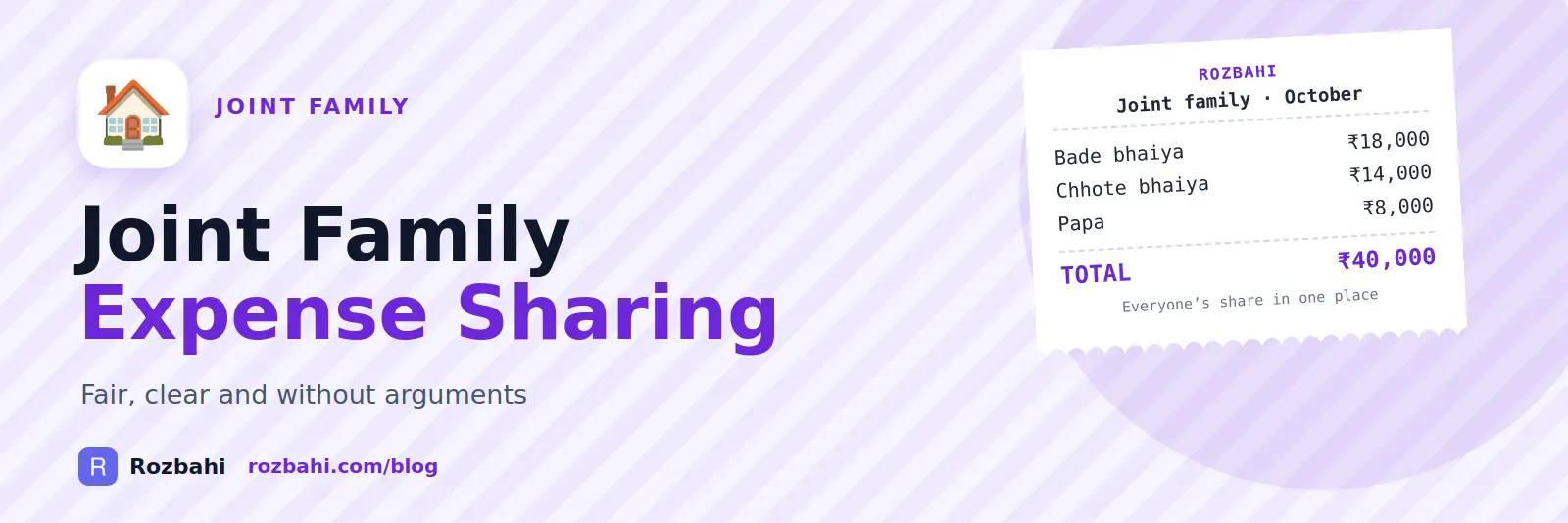
In a joint family in October, the elder brother paid ₹18,000 (rent and electricity), the younger brother paid ₹14,000 (kirana, internet and gas), and the father paid ₹8,000 (milk, vegetables and the maid). Household total: ₹40,000. With one record, everyone can see that the total is ₹40,000 and who covered what. If the family has agreed equal shares between the three, each share is about ₹13,333, and they can settle the difference; if they have agreed shares by income or by responsibility, they compare against that instead.
Step 4: Review once a month
Fifteen minutes, once a month, with the earning members:
- Look at the household total and the top categories.
- Check contributions against what was agreed.
- Plan for upcoming big costs — a festival, a wedding, a repair.
- Agree any adjustments calmly.
Keep it about the household, not about individuals.
Planning big shared costs
Weddings, festivals, home repairs and parents' health can be large. Agree in advance how they will be shared, and save for them together where possible. See the wedding budget planner and Diwali budget planning.
Keeping privacy and respect
Sharing household costs does not mean sharing everything. Each family unit's personal spending and savings remain its own. A good joint family system shows the household picture clearly, while respecting each unit's independence.
Starting the conversation
If money has never been discussed openly in the family, start gently. Choose a calm time, not right after a disagreement. Begin with the goal — "let's make sure the house runs smoothly and nobody feels burdened" — and look at the list of household costs together. Invite the elders to share how things worked in the past; their experience often helps settle what is fair.
When incomes or situations change
Joint families change: a new job, a marriage, a new child, a retirement, a member moving out for work. Revisit the sharing arrangement whenever something changes, not only when there is a problem. A short family meeting at those moments keeps the system fair and avoids slow-building resentment.
Caring for parents
Parents' medical costs, medicines and help at home can be significant and grow over time. Decide openly how they will be shared among siblings, including those living elsewhere. Keeping these costs in the shared record makes contributions visible and fair, and makes it easier to plan for larger medical expenses — health insurance and an emergency fund matter a lot here. See how much emergency fund you need.
Small habits that keep harmony
- Record on the same day you pay a household cost.
- Agree a limit above which household purchases are discussed first.
- Thank people for what they contribute — money and time both matter.
- Keep personal money personal.
- Plan festivals and functions together well in advance.
The bottom line
A joint family runs best on clarity. Agree what is shared, choose a way of contributing that everyone feels is fair, keep one household record where everyone adds what they pay, and talk about it briefly every month. Plan festivals, functions and parents' care together. With a simple system in place, money stops being a source of quiet tension and becomes one more thing the family manages well together.
A family meeting checklist
- Household total for the month and the top three categories
- Who paid what, compared with what was agreed
- Any member who needs support this month
- Upcoming big costs: festivals, functions, repairs, medical
- One improvement for next month
Ten to fifteen minutes with this list keeps everyone informed and the household on track.
Living together, saving together
Many joint families also save together for shared goals: a bigger home, a family vehicle, a pilgrimage or a family holiday. A shared goal with a clear target and date, with each unit contributing its agreed share every month, turns the household from a place of shared costs into a team building something together.
How to do this in Rozbahi
- Create a family group in Rozbahi and share the 6-letter invite code with the earning members.
- Each person records household costs they pay in the group; personal spending stays private in their own account.
- See the month: the group total and how much each member has spent.
- Settle up if you share equally: Rozbahi splits group spending equally and shows the fewest payments needed. If your family shares by income or by responsibility, use the member totals and settle the agreed amounts yourselves.
- Use Hindi or English — each person can choose their app language.
Frequently asked questions
How should expenses be shared in a joint family?
Agree what is shared, choose equal, income-based or responsibility-based contributions, keep one household record and review monthly.
Is it fair to split joint family expenses equally?
It is fair when incomes are similar. When they differ a lot, income-based shares often feel fairer.
How can a joint family avoid money arguments?
Write down what is shared and how it is split, keep one clear record of who paid what, and talk about it briefly every month.
One household, one clear record: download Rozbahi.
Go deeper: Guide: split expenses with flatmates · Feature: split expenses