Living with roommates is cheaper than living alone, until someone feels they always pay for the toilet paper. Most flatmate fights are not about big money. They are about small, unclear shared costs that pile up. The fix is a simple system: agree what is shared, record it in one place, and settle up on a fixed day each month.
Step 1: Agree what counts as shared
Sit down once and list it. Typical shared costs:
- Rent and security deposit
- Electricity, water, gas, Wi-Fi
- Cleaning supplies, toilet paper, drinking water
- Groceries used by everyone (milk, oil, rice, bread)
- Maid or cook, if shared
Personal snacks, food delivery for one, and personal subscriptions stay personal. Write the list down so there is nothing to argue about later.
Step 2: Equal or unequal split?
Equal split is simplest and works when rooms and usage are similar. Everyone pays the same share of every shared cost.
Unequal split is fairer when one room is much bigger, has its own bathroom, or one person works from home and uses more electricity. A common approach is to split rent by room size and split everything else equally.
Many flats do both: agree the unequal rent split once, pay it directly to the landlord, and split all variable costs equally.
Step 3: Record every shared cost in one place
A paper on the fridge works until it gets lost. A WhatsApp message gets buried. Use one shared tracker where every flatmate adds what they paid, with a short note ("Wi-Fi October", "groceries DMart"). Add it the same day.
Step 4: Settle up on a fixed day
Pick a date, such as the 1st of each month, and settle everything for the previous month. With three or more people, do not settle every pair separately. Net it out: work out how much each person paid against their fair share, and have the people who paid less pay those who paid more, in as few payments as possible.
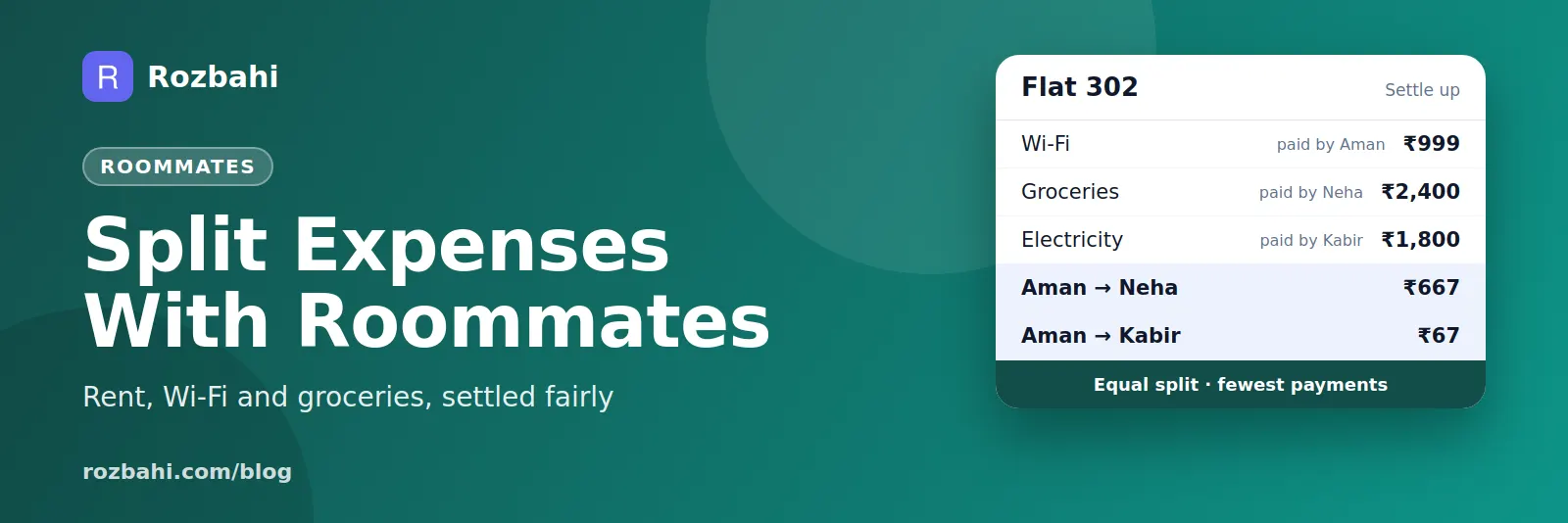
Example with equal shares: Aman paid ₹999 for Wi-Fi, Neha paid ₹2,400 for groceries and Kabir paid ₹1,800 for electricity. The total is ₹5,199, so each share is ₹1,733. Aman paid ₹734 less than his share, so he pays Neha ₹667 and Kabir ₹67. Two payments, and everyone is even.
Rules that keep the peace
- Log it the same day, with a note.
- No settling "later". Monthly, every month.
- Big one-off purchases (a fridge, a sofa) need a yes from everyone before buying.
- When someone moves out, settle everything up to their last day.
How to split rent when rooms are different
Rent is the biggest shared cost, and the one where "equal" often feels unfair. Three common methods:
- By room size: measure each bedroom, add a share of common areas, and split rent by area. Fair, but takes a tape measure and some maths.
- By features: start with an equal split, then adjust for extras — attached bathroom, balcony, AC, more light. For example, the room with an attached bathroom pays ₹1,500 more and the others pay ₹750 less each.
- By bidding: each person says what they would pay for each room; the highest bid for each room wins, scaled so the total matches the rent.
Whatever you choose, write it down and keep it until the lease changes. Renegotiating rent every month is the fastest way to ruin a flat.
A shared groceries system that works
Groceries are where most small disputes start. Pick one of these and stick to it:
- Shared staples only. Rice, atta, oil, milk, tea, cleaning items are shared; everything else is personal. Simple and common.
- Rotating shopper. Each person does the weekly shop in turn and logs the bill; the monthly settle-up evens out the difference.
- Kitty fund. Everyone puts a fixed amount into a shared pot each month; groceries are paid from it. Top up or refund at month end.
Deposits, move-ins and move-outs
- Security deposit: record who paid how much. When someone leaves, the new flatmate usually pays them their share directly.
- Move-in costs (painting, a new gas connection, a shared fridge): agree before spending, and decide whether a person who moves out gets a share back.
- Last month: settle everything up to the leaving date, including a share of bills that arrive after they leave.
Signs your system needs a reset
If people stop logging, payments are months behind, or one person feels they always pay more, sit down and reset: settle everything to zero, re-agree what is shared, and start the next month clean. A fresh start is cheaper than a slow-building argument.
A sample monthly settle-up
Three flatmates share Wi-Fi, electricity, a cook and groceries equally. In October:
- Aman paid Wi-Fi ₹999 and the cook ₹6,000: ₹6,999
- Neha paid groceries twice: ₹4,800
- Kabir paid electricity ₹1,800 and drinking water ₹600: ₹2,400
Total shared spending is ₹14,199, so each person's share is ₹4,733. Aman paid ₹2,266 more than his share, Neha paid ₹67 more, and Kabir paid ₹2,333 less. The settle-up is two payments: Kabir pays Aman ₹2,266 and Neha ₹67. Two transfers on the 1st, and the month is closed.
Keep the record, even when it is "only ₹50"
It is tempting to skip small shared costs — a bar of soap, a bulb, a bottle of phenyl. Do not. Small items are exactly the ones people remember differently. Logging them takes seconds and removes the most common source of "I always pay for this" arguments.
Write a one-page flat agreement
A short written agreement prevents most disputes before they start. Cover five points: how rent is split, which costs are shared, who pays which bills, the settle-up date, and what happens when someone moves out. Share it in your flat group chat and pin it. When a question comes up, the answer is already written down.
Above all, keep it routine. A system that runs the same way every month — log the day you pay, settle on the 1st — takes the emotion out of shared money and lets flatmates stay friends.
How to do this in Rozbahi
- Create a group for your flat in Rozbahi and share the 6-letter invite code.
- Each flatmate adds shared costs to the group when they pay. Personal spending stays in each person's own account.
- Open Settle up to see each person's balance for the month and the fewest payments needed. Rozbahi splits group spending equally between members.
- Mark payments as done once they are paid, so everyone sees the month is closed.
Rozbahi's settle-up is an equal split. If your flat splits rent unequally, keep rent outside the group and use the group for everything you share equally.
Frequently asked questions
Should roommates split rent equally?
Only if rooms are similar. If one room is clearly bigger or has a private bathroom, split rent by room and split utilities equally.
How do you split electricity with roommates when usage differs?
Equal is simplest. If one person has an AC or works from home all day, agree a fixed extra amount for them rather than measuring every unit.
What is the easiest way to settle shared expenses?
Net everything once a month and make the fewest payments, instead of paying each person back for each item.
Also sharing costs on trips? Read our Splitwise alternative guide. Set up your flat: download Rozbahi.
Go deeper: Guide: split expenses with flatmates · Feature: split expenses