An Indian wedding is a celebration, a family event and, for many households, the largest single expense they will ever plan. Venue and catering, clothes and jewellery, decor, photography, gifts and shagun, travel and stay for guests — the list is long, the decisions are emotional, and costs grow quietly as "just one more" gets added. A wedding budget planner keeps the celebration joyful and the finances under control. This guide shows how to build one and keep it on track.
Step 1: Decide the total first
Before booking anything, agree on one number: the total the family is comfortable spending without loans that will hurt for years. Include all sources — savings, contributions from parents and relatives, and the couple's own money. Write it down. Every later decision is measured against it.
Step 2: Split the total by category
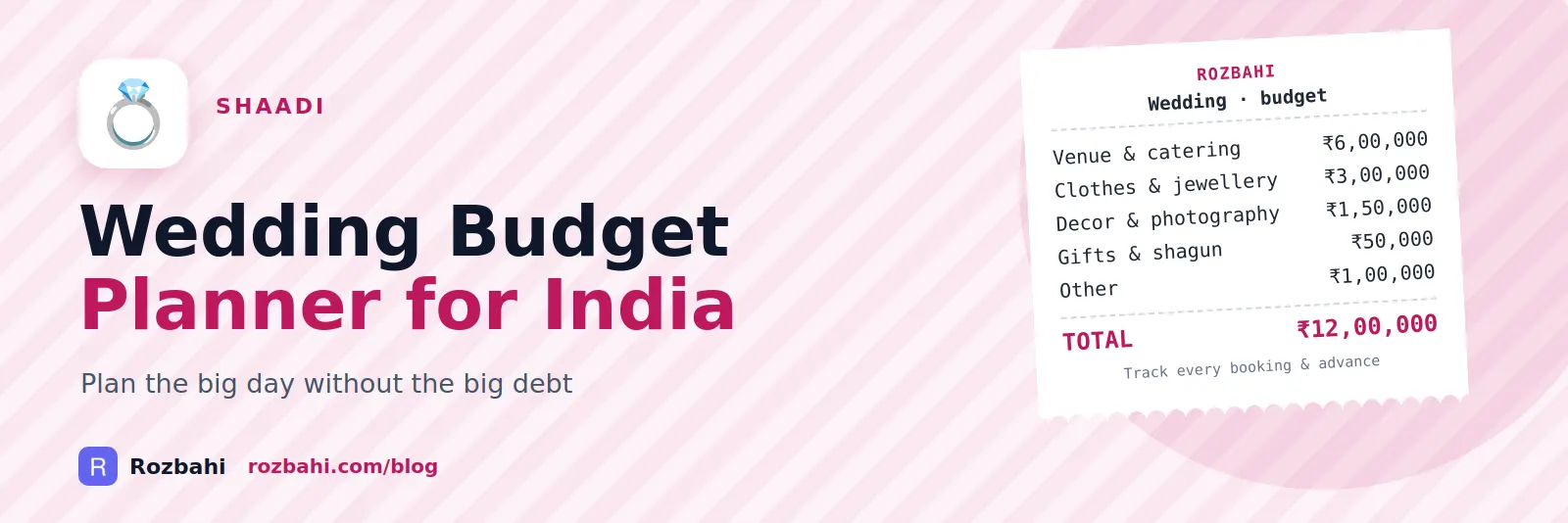
An example wedding budget of ₹12,00,000:
- Venue and catering: ₹6,00,000 (50%)
- Clothes and jewellery: ₹3,00,000 (25%)
- Decor and photography: ₹1,50,000 (12.5%)
- Gifts and shagun: ₹50,000
- Other (invitations, travel, mehendi, music, transport, contingency): ₹1,00,000
Your split will differ by region, guest count and priorities. The point is that every category has a limit before you start talking to vendors.
Step 3: The guest list drives the budget
Venue and catering usually depend on the number of guests, so the guest list is the single biggest budget lever. Fix the list early, with clear numbers for each side and each function. Every extra hundred guests adds catering, space, gifts and logistics. If the budget is tight, trimming the list is often less painful than cutting quality everywhere.
Step 4: Track every booking and advance
Weddings involve many advances paid over months: venue booking, caterer token, decorator advance, photographer, jeweller, tailor. It is very easy to lose track of what is paid and what is still due. For every vendor, record:
- Total agreed amount
- Advance paid, date and who paid it
- Balance due and the due date
- What is included — and what is extra
Get every quote and inclusion in writing, and keep receipts.
Step 5: Plan family contributions
In many families, both sides and several relatives contribute. Agree in advance who pays for what, and record each payment against the person who made it. A shared record avoids misunderstandings later and makes it clear what is still needed. For larger families, our joint family expense sharing guide covers how to keep it fair.
Step 6: Keep a contingency
Something always costs more: extra guests, last-minute alterations, transport, tips, a broken item. Keep about 5–10% of the total as contingency, untouched until needed. If it is not used, it is a welcome start to married life.
Where wedding budgets usually overrun
- Guest numbers creeping up.
- Add-ons from decorators and caterers: extra counters, upgrades, late-night food.
- Clothes and jewellery for many functions and family members.
- Photography and video packages with extra days and albums.
- Return gifts and gifts for relatives.
- Taxes and service charges not included in quotes.
Ways to save without losing the joy
- Book early and consider off-peak dates and days.
- Combine functions where it suits the family.
- Prioritise: spend on the two or three things that matter most to you, and keep the rest simple.
- Compare at least three quotes for every major vendor.
- Reuse and rent outfits and decor where possible.
Avoid wedding debt
Wedding loans and credit card EMIs can stretch the celebration's cost for years. If the plan needs borrowing, look again at the guest list and the biggest categories first. If some borrowing is unavoidable, keep it small, compare interest rates and have a clear repayment plan before signing. Saving for a wedding over one to three years — with a named savings goal — is the most comfortable path. See how to set savings goals.
Attending weddings: plan for those too
Even if you are not hosting, wedding season brings costs: shagun, gifts, clothes, travel. Families attending several weddings a year benefit from a small monthly set-aside, just like festivals.
A wedding planning timeline
- 12 months before: agree the total, the guest list range and the dates; start saving monthly.
- 9–10 months before: book the venue and caterer; pay advances and record them.
- 6–8 months before: book photographer, decorator and other major vendors; start jewellery and clothes planning.
- 3 months before: invitations, travel and stay for guests, return gifts.
- 1 month before: confirm final numbers, balances due and payment dates for every vendor.
- Wedding week: keep one person in charge of payments and tips, and record everything.
- After the wedding: settle all balances, review the budget, and close the record.
Shagun and gifts received
Many families receive shagun and gifts from guests. Record them separately from expenses, as income or in a simple list, so you know the real net cost of the wedding and have a record for returning the gesture at future family events.
Questions to ask every vendor
- What exactly is included, and what costs extra?
- Are taxes and service charges included in the quote?
- What is the advance, and when are the balances due?
- What is the cancellation and refund policy?
- Can you put all of this in writing?
Clear answers before booking prevent most budget overruns.
The couple's own money
If the couple contributes, agree how much early and keep it separate from family contributions in the record. Starting married life with a clear picture — and ideally some savings left — matters more than any single wedding expense. After the wedding, the couple can move straight into a shared household budget; see budgeting for couples.
The bottom line
Agree the total first, let the guest list guide the budget, track every advance with the vendor and who paid, keep a contingency, and avoid debt that outlasts the celebration. A clear wedding budget lets the family enjoy the day instead of worrying about it.
Start with this month: write it down, track it, and adjust next month based on what you learn.
How to do this in Rozbahi
- Create a savings goal in Rozbahi for the wedding, with the target and the date.
- Add wedding categories — Venue & Catering, Clothes & Jewellery, Decor & Photography, Gifts, Other — and set a budget for each.
- Log every advance and payment with the vendor name and a note of what it was for.
- Create a family group so every family member who pays records it in one shared place; the group shows how much each member has spent.
- Check totals by category in the report as payments come in, and compare against each budget.
- Export to PDF or Excel for a full record to share with the family (part of Plus, or unlocked by inviting a friend).
Frequently asked questions
How do I make a wedding budget in India?
Agree a total, split it by category, fix the guest list, compare quotes, track every advance and keep a 5–10% contingency.
What is usually the biggest wedding expense?
Venue and catering, which depend mostly on the number of guests.
How can I reduce wedding costs?
Trim the guest list, book early, choose off-peak dates, combine functions and spend most on the few things that matter most to you.
Plan the shaadi with clarity: download Rozbahi.
Go deeper: Guide: how to make a monthly budget · Feature: budget planner