An emergency fund is money set aside for the things you cannot plan: a job loss, a medical bill, an urgent repair, a family emergency. It is the foundation of every other financial goal, because without it, the first surprise sends you to a credit card or a loan. The usual advice is "three to six months of expenses" — but how much is that for you, and which expenses count? This guide gives you a simple formula and a plan to build it.
The simple formula
Emergency fund = monthly essential expenses × number of months
Two parts to get right: the monthly essentials, and the number of months.
Part 1: Your monthly essential expenses
Essentials are what you would still pay if your income stopped tomorrow:
- Rent or home loan EMI
- Groceries, milk, vegetables
- Electricity, water, gas, internet, mobile
- Other loan EMIs and insurance premiums
- School fees and essential transport
- Regular medicines
Leave out dining out, shopping, holidays and most subscriptions; in an emergency, you would cut them. The most reliable way to find this number is to look at your real spending for the last two or three months by category, and add up only the essential ones.
Part 2: How many months?
- 3 months: stable salaried job, two incomes in the household, good health insurance, no dependants.
- 6 months: one income in the household, dependants, or an industry with layoffs.
- 9–12 months: self-employed, freelance or commission-based income, business owners, or people supporting a large family.
When in doubt, aim for six months.
Worked example
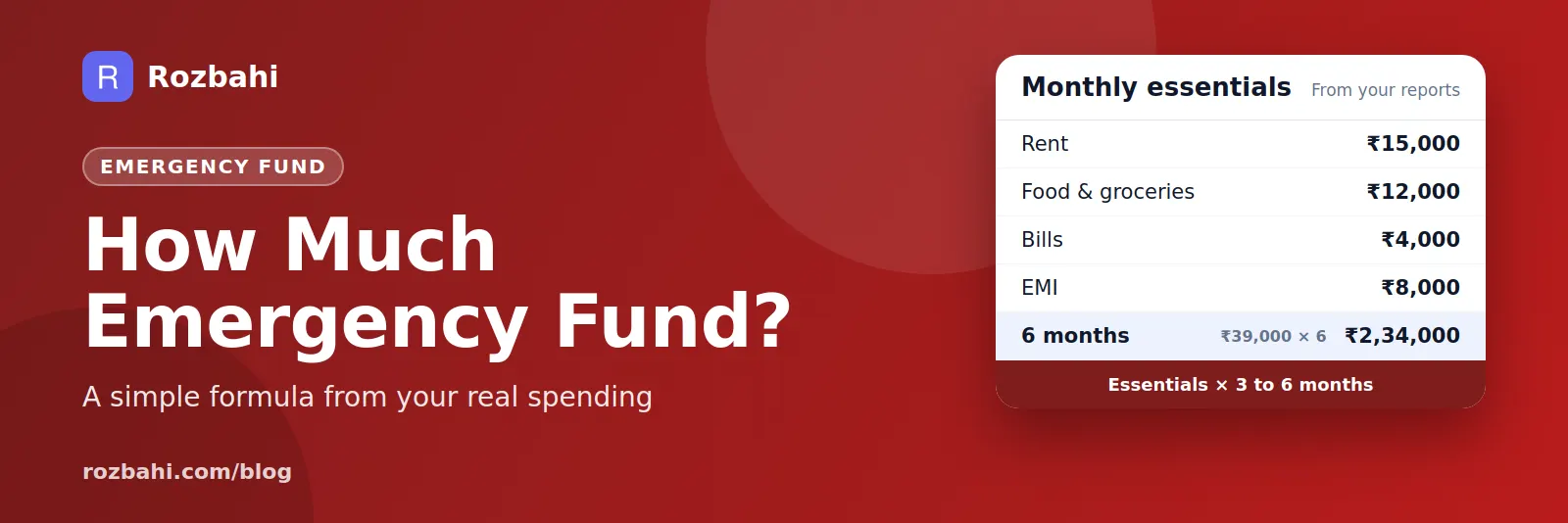
A family's essential monthly costs:
- Rent: ₹15,000
- Food and groceries: ₹12,000
- Bills and utilities: ₹4,000
- Loan EMI: ₹8,000
Monthly essentials: ₹39,000. With one income and two children, they choose six months: ₹39,000 × 6 = ₹2,34,000.
A freelancer with essentials of ₹25,000 a month chooses nine months: ₹2,25,000. A dual-income couple with no children and essentials of $3,000 chooses three months: $9,000.
Where to keep an emergency fund
An emergency fund must be safe and available quickly. That usually means:
- A separate savings account, so it is not mixed with daily spending.
- Short-term deposits that can be broken without large penalties, for part of the fund.
- Some cash at home for situations where digital payments do not work, if that makes sense where you live.
Avoid putting it into investments that can fall in value or take days to sell. The goal is not growth; it is being there when needed.
How to build it step by step
- Start with one month. A first milestone of one month of essentials already covers most small emergencies.
- Set a monthly amount using your savings goal: (target − saved) ÷ months.
- Save on salary day, automatically, into the separate account.
- Add windfalls: bonuses, tax refunds and cash gifts can speed it up.
- Keep going to the full target, then redirect the monthly amount to other goals.
For the ₹2,34,000 example, saving ₹10,000 a month gets the family to one month of cover in four months and to the full fund in about two years. Faster is better, but steady is what matters.
What counts as an emergency?
- Yes: job loss, urgent medical costs, essential home or vehicle repairs, urgent family travel.
- No: sales, holidays, a new phone, a planned wedding or festival. These deserve their own savings goals.
If you use the fund, refill it first before restarting other goals.
Review it once a year
Costs change: rent goes up, a child starts school, a loan ends. Once a year, recalculate your monthly essentials from your tracked spending and adjust the target.
Why you need an emergency fund before anything else
Without an emergency fund, every surprise becomes debt. A ₹40,000 medical bill on a credit card, carried for a few months, can cost far more than the bill itself in interest. A car repair paid with a personal loan adds months of EMIs. An emergency fund turns these into inconveniences instead of setbacks. It also gives you options: the freedom to look for a better job, or to take time to recover from illness, without panic.
Your emergency fund checklist
- Track two to three months of spending by category.
- Add up only the essential categories to find your monthly essentials.
- Choose 3, 6 or 9–12 months based on how stable your income is.
- Multiply to get your target.
- Open a separate account for the fund.
- Set a monthly amount and move it on salary day.
- Reach one month of cover first, then keep going.
- Refill after using it, and review the target yearly.
Emergency fund for different situations
- Students and young professionals: start small — even ₹10,000 to ₹25,000 covers many surprises — and grow it with each pay rise.
- Single-income families: six months or more, because one job loss stops all income.
- Dual-income couples: three to six months; consider what happens if the higher earner loses their job.
- Freelancers and business owners: nine to twelve months, kept separate from business money.
- People supporting parents: include their essential costs, especially medicines.
Emergency fund and insurance work together
An emergency fund is not a replacement for insurance. Health insurance covers large medical bills that would empty any fund; term life insurance protects your family if your income stops permanently. The emergency fund covers everything in between: deductibles, gaps in cover, job loss and the many smaller surprises that insurance does not pay for. Having both is what makes a household financially resilient.
Common mistakes
- Counting all spending, not just essentials, which makes the target feel impossible.
- Keeping the fund in a daily spending account, where it slowly gets spent.
- Investing it in something volatile, so it is worth less exactly when you need it.
- Using it for planned expenses like holidays or festivals.
Start this month. Work out your essentials, choose the number of months, and move the first amount on your next salary day. The first ₹10,000 is the hardest; after that, the habit carries itself.
Peace of mind is worth every rupee you put aside.
How to do this in Rozbahi
- Find your essentials in Rozbahi: your monthly report shows spending by category, so you can add up rent, groceries, milk, vegetables, bills, health and education.
- Create an "Emergency fund" savings goal with the target from the formula and a deadline.
- Set aside the monthly amount on salary day; your report shows income, spending and what is left each month.
- Keep essentials steady with category budgets, so the target stays realistic.
See also how to set savings goals you will reach.
Frequently asked questions
Is 3 months of expenses enough for an emergency fund?
For a stable job with two incomes and good insurance, often yes. With one income, dependants or irregular work, aim for six months or more.
Should I build an emergency fund or pay off debt first?
Build a small fund — about one month of essentials — first, then pay off expensive debt, then complete the fund.
Should I invest my emergency fund?
Keep it safe and quick to reach, such as a savings account or short deposits. Investments that can fall in value are better for long-term goals.
Work out your number: download Rozbahi and see your essential spending by category.
Go deeper: Feature: budget planner · Feature: expense reports