The monthly kirana shop is the biggest single grocery trip for most Indian families — and the one where money disappears fastest without a list. Walk into a store or open a grocery app without a plan and the basket fills with things you already have, while the one thing you actually ran out of gets forgotten. A good monthly kirana list fixes both. This guide gives you a complete list for an Indian kitchen, typical quantities for a family of four, and tips to bring the bill down.
How to use this list
Quantities below are a starting point for a family of four eating most meals at home. Adjust them after one month: note what ran out early and what was left over, and change the list. Within two or three months you will have a list that fits your home exactly.
1. Atta, rice and grains
- Wheat atta: 10–15 kg
- Rice: 8–10 kg
- Suji (rava): 1 kg
- Besan: 1 kg
- Poha: 1 kg
- Daliya or oats: 1 kg
- Maida: 500 g (if you use it)
2. Dals and pulses
- Toor (arhar) dal: 2 kg
- Moong dal: 1 kg
- Masoor dal: 1 kg
- Chana dal: 1 kg
- Urad dal: 500 g–1 kg
- Rajma and kabuli chana: 500 g each
3. Oil and ghee
- Cooking oil (mustard, sunflower, groundnut or rice bran): 4–5 L
- Ghee: 500 g–1 kg
4. Masale and basics
- Salt: 2 kg
- Sugar: 3–4 kg
- Jaggery: 500 g
- Turmeric, red chilli and coriander powder: 200 g each
- Garam masala, cumin (jeera), mustard seeds (rai): 100–200 g each
- Hing, kasuri methi, ajwain, black pepper: small packs
- Tea: 500 g–1 kg; coffee if used
5. Breakfast and snacks
- Biscuits and rusk
- Namkeen
- Cornflakes or muesli (if used)
- Peanuts, dry fruits (small quantities)
- Pickles, papad, sauces
6. Cleaning and household
- Detergent powder or liquid
- Dishwash bar or liquid, scrubbers
- Floor cleaner, toilet cleaner, phenyl
- Garbage bags
- Agarbatti, matchbox
7. Personal care
- Bathing soap, shampoo, toothpaste, toothbrushes
- Hair oil, face wash, shaving items
- Sanitary products
What is not on the monthly list
Milk, curd, bread, eggs, vegetables and fruit are bought daily or weekly, so they belong on a separate weekly list. Keeping them apart helps you see what the monthly stock-up really costs. Our milk bill guide covers the daily doodh hisab.
What a monthly kirana shop costs
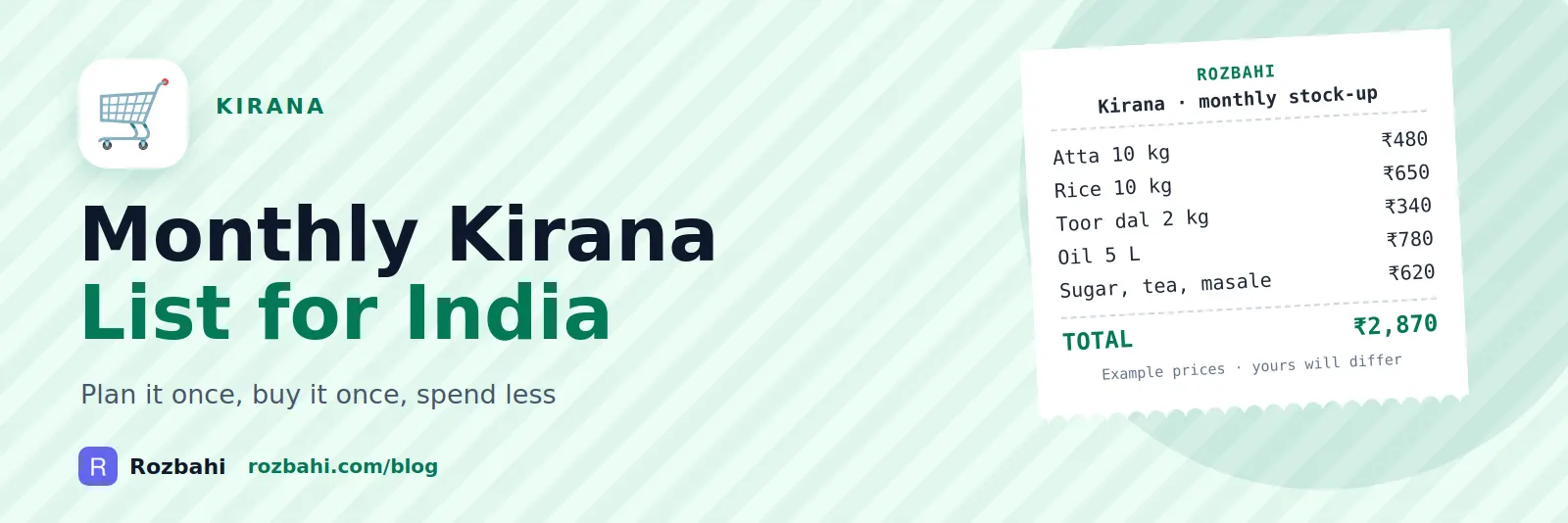
Prices vary by city, brand and store, so use your own bills as the reference. As an example, a few core items might look like this: atta 10 kg ₹480, rice 10 kg ₹650, toor dal 2 kg ₹340, oil 5 L ₹780, and sugar, tea and masale ₹620 — about ₹2,870 for these basics alone. Add the rest of the list and many families land in the range of a few thousand to over ten thousand rupees a month. Your number is the one that matters; track it for two months to find it.
Tips to cut the kirana bill
- Check the shelves before writing the list. Many "monthly" items last six weeks.
- Buy staples in larger packs where the per-kg price is lower and you have storage.
- Compare store brands for atta, rice, sugar, salt and cleaning items.
- Buy once a month, not in several small top-ups. Every extra trip adds impulse items.
- Watch quick-delivery orders: convenient, but small orders and fees add up.
- Store grains properly in airtight containers to avoid waste.
For more ideas, read how to save money on groceries.
Wholesale market, supermarket or app?
- Wholesale or mandi: often cheapest for staples bought in bulk; needs time and transport.
- Supermarket: good monthly offers and store brands; easy to overspend on extras.
- Local kirana: convenient, home delivery, sometimes credit; prices can be a little higher.
- Grocery apps: easy to compare prices; watch minimum orders and fees.
Many families mix: staples from a wholesale market or supermarket once a month, and daily items from the local kirana.
Adjusting the list for your family
- Single person or couple: halve most quantities and buy smaller packs; food waste is the bigger risk than price.
- Joint family of six to eight: roughly double staples, and buy atta, rice and oil in the largest packs you can store.
- Families with young children: add milk powder, baby food or extra snacks if needed, and track them separately so they do not hide inside groceries.
- South Indian kitchens: more rice, urad dal, coconut oil, tamarind and sambar powder; less atta.
- Bengali and eastern kitchens: more mustard oil, rice and panch phoron.
- Gujarati and Rajasthani kitchens: more besan, bajra or jowar atta and jaggery.
Make a reusable list
Write your list once, grouped exactly like the store or app you use: grains, dals, oils, masale, snacks, cleaning, personal care. Keep it on your phone or on the fridge. Each month, tick off what you still have and buy only the rest. A reusable list takes ten minutes to make once and saves time and money every month after.
Storage tips that stop waste
- Keep atta, rice and dals in airtight containers in a cool, dry place.
- Add a few bay leaves or dried neem leaves to grain containers, as many families do, to keep insects away.
- Store masale away from the stove so heat and steam do not spoil them.
- Write the purchase month on containers and use older stock first.
- Buy oil in a size you finish within two or three months.
Track for two months, then budget
The first month tells you what your kirana really costs; the second confirms it. Then set a monthly Groceries budget slightly below your average and stick to one monthly stock-up plus planned weekly fresh purchases. Our grocery budget guide explains how to set the number.
The bottom line
Write the list once, shop once a month, buy fresh items weekly, store staples well and track the bill. Two months of this gives you a kirana budget that fits your family and a shopping routine that takes less time.
Start with this month: write it down, track it, and adjust next month based on what you learn.
How to do this in Rozbahi
- Log the monthly shop in Rozbahi under Groceries (किराना), with the store name.
- Log top-ups too, so you can see how many extra trips the month needed.
- Keep milk, vegetables and fruit in their own categories so the monthly kirana number stays clear.
- Set a monthly Groceries budget and watch the percentage used.
- Check your top shops in the monthly report and compare with last month.
- Share with the family so purchases by anyone count toward one budget.
Frequently asked questions
What should be on a monthly grocery list in India?
Atta, rice and grains; dals; oil and ghee; salt, sugar, tea and masale; breakfast items and snacks; cleaning supplies; and personal care items. Milk, vegetables and fruit are usually bought weekly or daily.
How much atta does a family of four need in a month?
Often around 10–15 kg if rotis are eaten daily, but it varies with diet. Track one month and adjust.
How can I reduce my monthly kirana bill?
Make a list from what is already at home, shop once a month, compare store brands and pack sizes, and avoid frequent small top-up orders.
Track your kirana bill: download Rozbahi.
Go deeper: Guide: household expense categories · Feature: recurring bills