Groceries are one of the few big expenses you can change this week. Rent and EMIs are fixed for months; your grocery bill is decided every time you shop. That makes it the best place to start if you want to save money without giving up anything important. This guide collects the tips that actually work — not coupon hunting for hours, but simple habits that cut a typical grocery bill by 10–20%.
First, find out where your grocery money goes
Before changing anything, track every grocery purchase for two to four weeks: big shops, small top-ups and delivery orders. Note the shop and the amount. Three patterns usually appear:
- Too many trips. Every extra trip adds items you did not plan to buy.
- One expensive habit. Snacks, drinks, ready-to-eat food or a favourite premium brand.
- Waste. Vegetables and fruit that spoil before they are used.
Our guide to a realistic grocery budget per month shows how to turn these numbers into a target.
Plan before you shop
1. Plan meals for the week
Ten minutes on the weekend to list dinners for the week is the single biggest saving. You buy what you will cook, not what looks good.
2. Shop the kitchen first
Check the fridge and shelves before writing the list. Build two or three meals around what is already there.
3. Write a list — and stick to it
Group the list by store section so you move quickly. Anything not on the list waits until next week; if you still want it then, add it.
4. Set a budget per trip
Knowing you have ₹1,500 for this week's fresh items changes what goes in the basket.
Shop smarter
5. Shop less often
One monthly stock-up for staples and one weekly trip for fresh food beats many small trips. Quick-delivery orders are convenient but expensive: small orders, delivery fees and impulse add-ons.
6. Compare unit prices
Look at the price per kg or per litre, not the pack price. Bigger packs are often cheaper per unit, but not always.
7. Try store brands for basics
Rice, sugar, salt, cleaning products and many staples are just as good in store or local brands, often for noticeably less.
8. Buy seasonal produce
Vegetables and fruit in season are cheaper and taste better. Out-of-season produce can cost several times more.
9. Buy staples in bulk — carefully
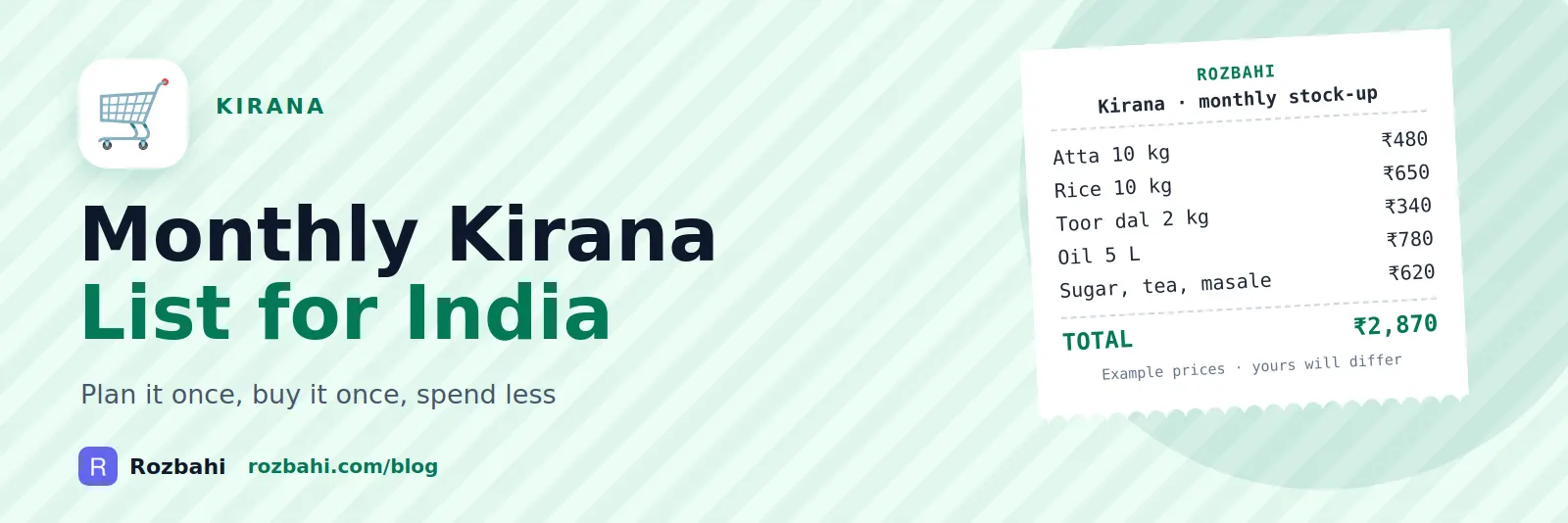
Bulk rice, atta, dal and oil save money if you use them before they spoil and have space to store them. Do not bulk-buy perishables or anything you are trying for the first time.
10. Do not shop hungry or in a hurry
Hungry shoppers buy snacks; hurried shoppers grab expensive convenience items.
Waste less
11. Store food properly
Leafy greens wrapped in cloth, onions and potatoes kept apart, bread in a cool place. Good storage extends life by days.
12. Use leftovers on purpose
Plan one "leftovers" meal a week. Yesterday's dal and rice can become today's lunch.
13. First in, first out
Move older items to the front of the shelf and fridge so they are used first.
Track and review
14. Log every grocery purchase
Write down each trip with the shop name. After a month you will see which shop, and which habit, costs the most.
15. Review weekly
Five minutes each week: how much of the grocery budget is used, and is it ahead of the calendar? Adjust meals for the rest of the week if it is.
A realistic saving
Consider a family spending ₹10,000 a month on groceries across about 18 trips and orders. With weekly meal planning, one monthly stock-up and one weekly fresh trip, store brands on basics and less waste, the same family typically gets to around ₹8,500–9,000 with 6–8 trips. That is ₹1,000–1,500 a month, or ₹12,000–18,000 a year, with no drop in what they eat.
Grocery saving mistakes
- Buying in bulk what you do not use. A bargain that spoils is not a bargain.
- Chasing every discount across many shops, spending more on travel and time than you save.
- Cutting nutrition. Save on packaging and brands, not on vegetables, fruit and protein.
- Not tracking. Without numbers, it is impossible to know whether a change worked.
A one-week plan to start saving
- Saturday: check the kitchen, plan seven dinners and two lunches using what you have, and write the list.
- Sunday: one trip for the week's fresh food. Stick to the list; anything extra goes on next week's list.
- Monday to Friday: no top-up trips. If something runs out, adjust the meal instead.
- Wednesday: cook a little extra for Thursday's lunch.
- Friday: a "use it up" dinner from what is left in the fridge.
- Next Saturday: compare the week's grocery total with your usual week.
Most families notice the difference in the first week — not because they ate less, but because nothing was bought twice and little was thrown away.
Saving on daily items: milk, bread, vegetables
Daily purchases are easy to overlook because each one is small. A few ideas:
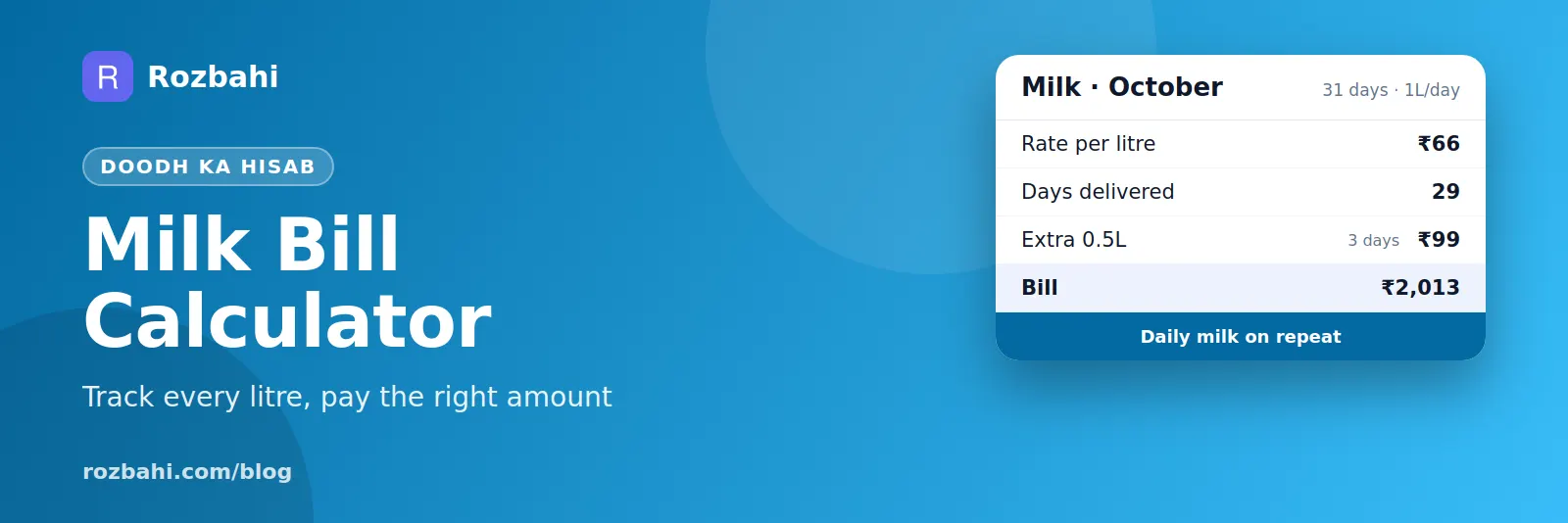
- Milk: a regular delivery at a fixed rate is often cheaper than buying packets ad hoc at a shop. Track it daily so the monthly bill is exact.
- Vegetables: buy two or three times a week from a market rather than daily from the nearest shop, and buy what is in season.
- Bread and eggs: buy with the weekly shop and store properly instead of daily runs.
Quick-commerce and delivery apps
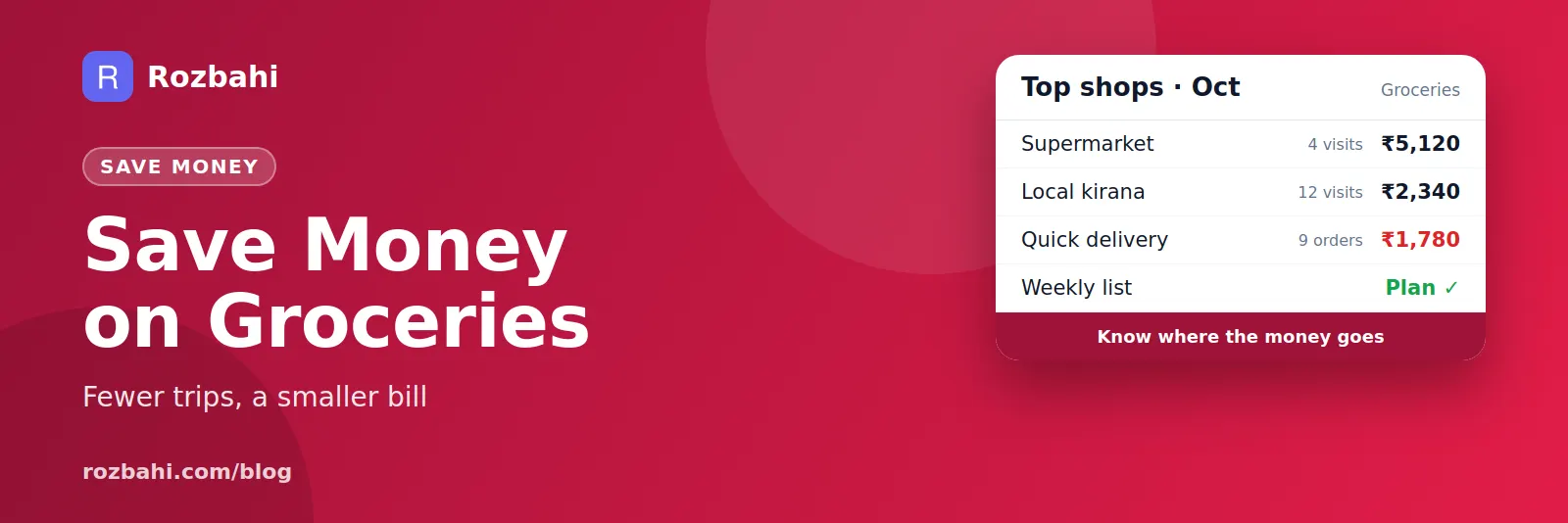
Ten-minute delivery apps are a genuine convenience, and an easy way to overspend. Small orders often carry delivery or handling fees, and every order is a chance to add snacks you did not plan. If you use them, set a rule: one planned order a week with a list, and no top-up orders for single items. Log every order in your tracker with the app name as the shop, and look at the monthly total. Many people are surprised by how much these "small" orders add up to.
Involve the whole household
Grocery savings stick when everyone is part of it. Share the weekly list on the fridge or in a family group so anyone can add items, agree on which brands are fine to switch, and show the family the monthly total. Children are often keen to help find cheaper options once they see the numbers.
How to do this in Rozbahi
- Log every trip in Rozbahi under Groceries, Vegetables, Fruits or Milk & Dairy, with the shop name.
- Set monthly budgets for these categories and watch the percentage used during the month.
- Check top shops in your monthly report — it shows where most of the money went.
- Compare with last month to see whether your new habits are working.
- Share with the family so every person's grocery trips count toward the same budget.
Frequently asked questions
What is the fastest way to cut my grocery bill?
Fewer trips with a list. Most impulse spending happens on unplanned top-up trips and delivery orders.
Is buying in bulk always cheaper?
Per unit, usually; overall, only if you use everything before it spoils and the big pack is genuinely cheaper per kg or litre.
How much can a family save on groceries?
Many families save 10–20% with planning, fewer trips and less waste, without changing what they eat.
Are delivery apps more expensive than shopping in person?
Often, once you include delivery fees, small-order charges and impulse items. Use them for planned orders rather than frequent top-ups.
See where your grocery money goes: download Rozbahi.
Go deeper: Guide: household expense categories · Feature: recurring bills · Feature: budget planner · Feature: expense reports