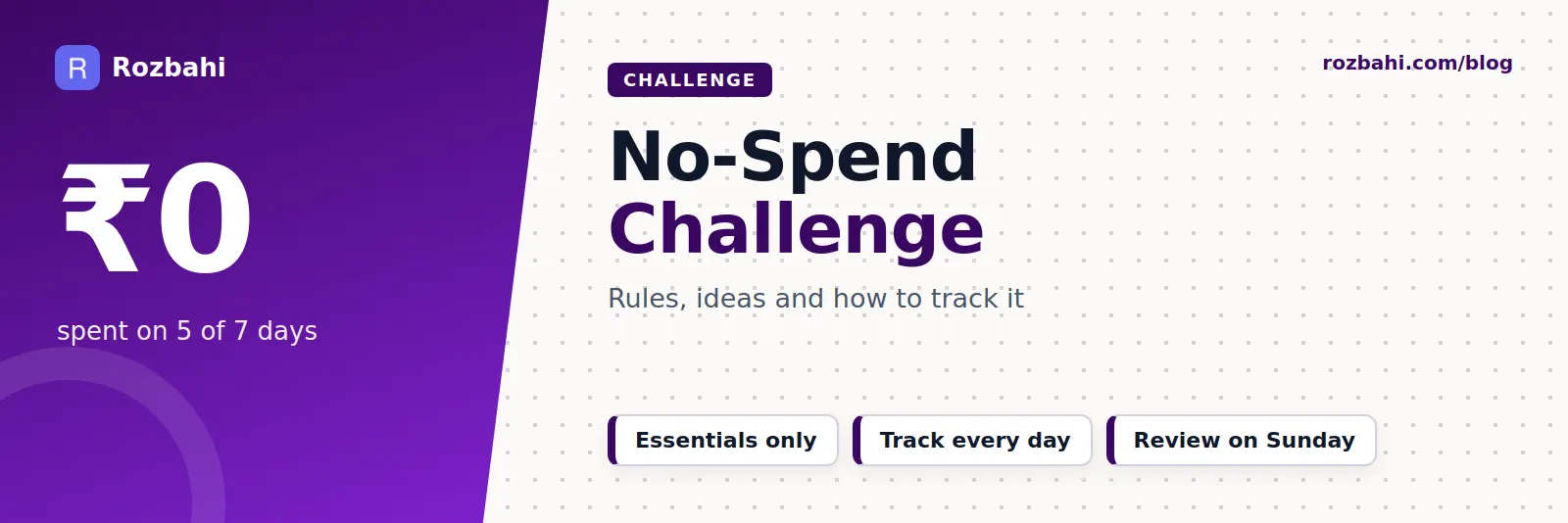
A no-spend challenge is simple: for a set period — a weekend, a week or a whole month — you spend money only on essentials. No eating out, no impulse shopping, no "just this once" orders. It sounds extreme, but it is one of the fastest ways to reset spending habits, find out what you really need, and free up money for savings. This guide covers the rules, ideas to stay on track, and how to track your progress.
Why try a no-spend challenge?
- It breaks autopilot. Many purchases are habits, not decisions. A pause shows which ones you actually miss.
- It frees up money fast for an emergency fund, a goal or paying off debt.
- It shows your triggers: boredom, stress, social plans, sales notifications.
- It resets "normal." After a week of essentials only, ordinary spending often looks different.
Step 1: Choose the length
- No-spend weekend: a good first try.
- No-spend week: enough to break a few habits.
- No-spend month: the full reset — plan it carefully.
- No-spend days: pick, say, three no-spend days every week for a month.
Step 2: Write your rules
Clear rules make the challenge doable. Decide before you start what is allowed.
Usually allowed (essentials):
- Rent, EMIs and bills
- Groceries for meals at home, milk and vegetables
- Medicines and health costs
- Transport to work and school
- Planned commitments you cannot move, like school fees
Usually not allowed:
- Eating out, cafés and food delivery
- Shopping for clothes, gadgets and home items
- New subscriptions and paid entertainment
- Snacks and drinks bought outside
- Impulse online orders
Write the list down. When you are tempted, the rule decides, not your mood.
Step 3: Prepare
- Stock up on groceries before you start, with a list, so you are not tempted on extra trips.
- Plan meals for the period.
- Unsubscribe from sale emails and turn off shopping app notifications.
- Tell family or flatmates — better still, do it together.
- Plan free activities for weekends.
Free and low-cost ideas
- Walks, parks and free local events
- Cooking a new recipe with what is at home
- Board games, cards or a movie night at home with what you already have
- Library books, podcasts and free online courses
- Decluttering — and selling what you do not need
- Calling or visiting friends and family
- Exercise at home or outdoors
Step 4: Track every day
Tracking makes the challenge real. Each day, note whether it was a no-spend day, and record every essential expense you did make. At the end of each week, look at:
- How many no-spend days you managed
- What you spent on essentials
- What you were tempted by, and when
Our guide on how to track daily expenses makes this quick.
A sample no-spend week
- Monday: no spend
- Tuesday: no spend
- Wednesday: essentials only — milk ₹66 and vegetables ₹140
- Thursday: no spend
- Friday: no spend — skipped the usual office-lunch order and took food from home
- Saturday: essentials only — weekly groceries from the list
- Sunday: no spend — a park visit and a movie at home
Five of seven days with no spending at all, and only planned essentials on the other two.
Step 5: Review and keep what works
When the challenge ends, compare the period with a normal one. How much did you save? Which purchases did you not miss at all? Turn the lessons into lasting changes: a lower dining-out budget, one fewer subscription, a weekly grocery list. Move the money you saved straight to a goal so it does not drift back into spending. See how to set savings goals.
Common mistakes
- Vague rules that bend every day.
- Starting too big: a no-spend month as a first try often fails; start with a weekend or a week.
- Stockpiling before the challenge just to buy everything in advance.
- Splurging after it ends and undoing the savings.
- Giving up after one slip. One purchase does not cancel the challenge; note it and carry on.
Handling social plans
Friends' birthdays, office lunches and weekend invitations are the hardest part of a no-spend challenge. A few approaches help:
- Suggest free alternatives: a walk, a picnic with food from home, a game night.
- Be honest: "I'm doing a no-spend week" usually gets support, and sometimes company.
- Pre-approve exceptions: if a wedding or birthday is unavoidable, put it in your rules in advance with a fixed amount.
- Host instead of going out using what you already have.
No-spend challenge for families
Doing it as a family multiplies the effect and keeps everyone motivated. Agree the rules together, let children suggest free activities, and put a chart on the fridge for no-spend days. At the end, decide together what to do with the money saved — part to savings, part to something the whole family will enjoy.
What people often learn
- Many "small" purchases were habits rather than wants.
- Cooking at home is cheaper and often better than expected.
- Boredom and stress drive a lot of spending.
- Free activities can be just as enjoyable as paid ones.
- Saving feels easier once you see how much was going on non-essentials.
After the challenge: a sustainable version
You do not have to live in no-spend mode forever. Many people keep one or two no-spend days a week, or a no-spend weekend each month, as a regular habit. It keeps spending deliberate without feeling restrictive.
The bottom line
A no-spend challenge is a short, deliberate pause. Choose a length you can finish, write clear rules for essentials, prepare before you start, plan free things to do, and track every day. When it ends, keep the lessons and move the money you saved straight to a goal. Start small with a weekend, then try a week — most people find it easier, and more rewarding, than they expected.
Pick your dates, write your rules on a single page and tell one person who will cheer you on. Then enjoy the extra money at the end.
Small pauses, done regularly, change spending habits for good.
How to do this in Rozbahi
- Record every essential expense in Rozbahi during the challenge, with quick add and templates.
- Check spending by day in your monthly report: days with no entries are your no-spend days.
- Set budgets of zero or near zero for dining out and shopping during the challenge, and watch them.
- Compare with last month to see exactly how much the challenge saved.
- Do it as a family with a family group, so everyone's spending counts.
Frequently asked questions
What counts as a no-spend day?
A day with no spending at all, or — depending on your rules — only on essentials like groceries for home, bills and medicines.
How much can a no-spend challenge save?
It depends on your normal spending on non-essentials. Many people are surprised by how much eating out, snacks and impulse shopping add up to over a week or a month.
Is a no-spend month realistic?
Yes, with clear rules and preparation. Start with a weekend or a week first, then try a month.
What should I do with the money I save?
Move it to savings or a goal on the day the challenge ends, before it gets spent.
Plan your first no-spend week: download Rozbahi.
Go deeper: Feature: budget planner · Feature: expense reports